


Updated: April 13, 2026
Alcohol is a tricky subject, as it can be easily moderated in some and completely life-altering in others. There’s also a lot of conflicting information about the “health benefits” of alcohol, how much is a “healthy” amount, and if certain types of alcohol are better than others. Lastly, alcohol is a socially acceptable drug that can blur the lines between an innocent drink and a health problem for many. Therefore, I wanted to share with you all that I know about alcohol and health, as well as recommendations on how to establish safe boundaries.
First up: What is Alcohol?
Alcohol, specifically ethanol, is a molecule found in many drinks like beer, wine, and liquor that is formed through the fermentation of sugar. It is the most commonly used (and abused) psychoactive drug, depressing or dulling the nervous system for a period of time. It also increases neurotransmitters in the brain involved in the reward center, which both contribute to the ‘feel good’ feeling with alcohol and the risk of addiction. When ethanol is digested, it turns into acetaldehyde, which is a toxicant to the brain and the reason for the “buzz” feeling. Alcohol also acts in the body as a ‘nutrient,’ giving us 7 calories per gram. To give you a better sense of reference, carbohydrates contain 4 calories per gram, and fat contains 9 calories per gram.
Benefits of Alcohol
The data on the benefits of alcohol are extremely mixed. In multiple large-scale studies, there does seem to be a benefit to a mild-moderate level of drinking (I will get to what that amount looks like later!). But we have to be careful interpreting this data:
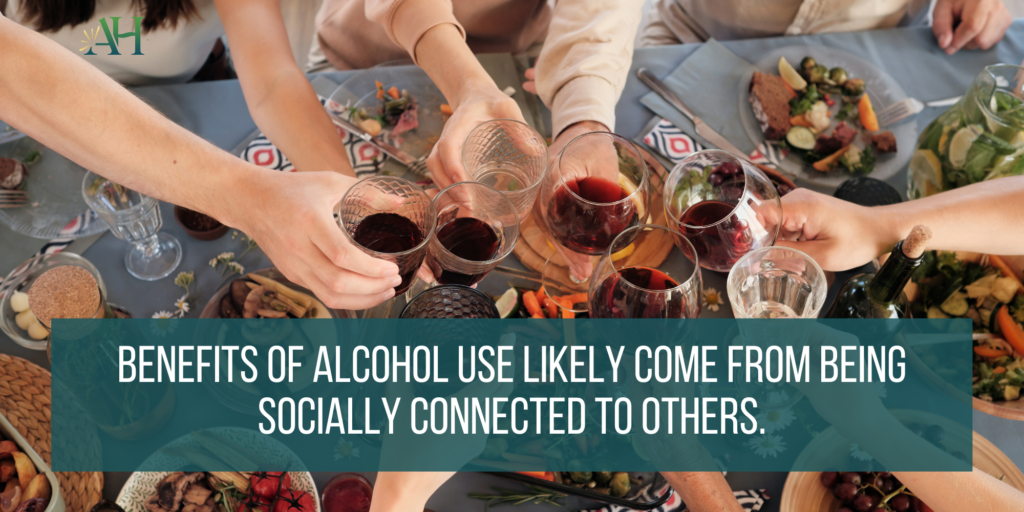
Are the benefits of drinking coming from the drink itself or the setting in which many people drink? Most cultural traditions involve alcohol in the setting of parties, holidays, or sharing a meal with family/friends. The health benefits of social connection and ritual are abundant and extremely powerful, so I tend to think the setting in which one drinks likely provides the “health benefit” of alcohol.
Some studies show that non-drinkers have greater health risks compared to moderate drinkers. But in these studies, people who choose NOT to drink may have other health related reasons for this: prior struggle with alcoholism, chronic medical conditions, debility.
Confusing, right?
Harmful Effects of Alcohol
Outside of the obvious harms to individuals and families from alcoholism, there are also other harms we should consider:
- Women who have >3 drinks per week have a 15-20% increased risk of breast cancer. Surprisingly, this is a much stronger risk factor for breast cancer than hormone replacement therapy.
- Alcohol increases the risk of other types of cancer: esophageal, liver, and colon cancers.
- Alcohol increases the risk of heart attacks/strokes by increasing lipid particles like triglycerides and LDL.
- Alcohol increases the risk of liver damage like fatty liver disease and cirrhosis.
- Alcohol increases the risk of diabetes through excess calories, increased sugar load, and damage to the liver/pancreas.
- Alcohol alters eating behavior, causing many to over consume foods.
- Alcohol dramatically reduces REM sleep, which is necessary for emotional processing/regulation and memory.
- Alcohol increases the risk of falls, especially in people >65yrs old. Falling is the greatest contributor to accidental death in this age population.
Who should really limit their alcohol intake?
We should all really monitor our alcohol intake and make sure we are staying well under the CDC recommendation (see below) most of the time. But for certain people, I ask them to either refrain from alcohol completely or make it a very rare treat:
- Patients with a history of substance abuse
- Women, especially those with a family history of breast cancer
- Patients with a family history of dementia
- Patients who desire weight loss, have diabetes, or have heart disease
- Patients suffering from depression or anxiety
- Patients with autoimmune disease
- Patients suffering from chronic gut-related symptoms
So how much should I drink?
This is a question I get a lot. Technically, the answer is none. Alcohol is a toxin to the body, so any amount has the potential to harm us in some way. But I’m not a teetotaler and recognize that alcohol in the setting of celebrations, get-togethers, and holidays can provide benefit in enhancing social connectedness.
My personal recommendation to patients:
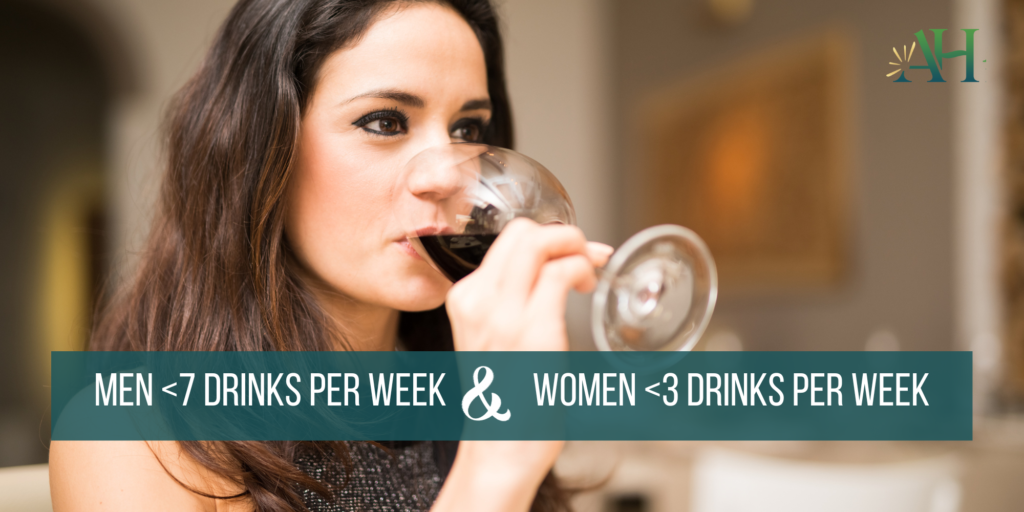
- Men <7 drinks per week
- Women <3 drinks per week
I recognize that my cut-offs are stricter than the standard CDC recommendation. I choose to do this because any more than what I’ve recommended starts getting you into murky water when it comes to your long-term health.
It’s also important to understand what a “drink” is. Alcohol serving sizes have been standardized for each major type (beer, wine, and liquor).
- Beer = 12oz drink containing 5% alcohol (If you live in and around Asheville, then you know that many beers contain far more than 5% alcohol and are often served in a 16oz pint glass.)
- Wine = 5oz glass containing 12% alcohol (when was the last time you measured out how much wine you pour into your glass?)
- Liquor = 1.5oz shot containing 40% alcohol (Liquor also has a pretty wide range of alcohol content, depending on what you’re buying)
So when we are thinking about our alcohol intake, we need to factor in these differences. The easiest way to do this is to use a calculator (https://www.rethinkingdrinking.niaaa.nih.gov/tools/calculators/drink-size-calculator.aspx). I encourage you to play around with this calculator the next time you drink — you may find that your one beer or one liquor drink may actually be 2 or 3 “drinks” once you account for alcohol content and volume. For example, a pint of beer containing 7% alcohol is actually considered 2 drinks.
I think I need to reduce how much I drink. What should I do?
We all can get into habit loops and drinking patterns that may not be good for our health. So it’s important to find simple solutions that help nudge you toward a better relationship with alcohol. With alcohol, there are a lot of strategies that you can start today to lessen how much you drink without dramatically impacting your quality of life.
- Establish boundaries for when or how much you drink (i.e. no more than 1 per night; no drinking on weekdays; never drink alone). For many, setting hard boundaries can make it much easier to change habits.
- Opt for non-alcoholic options. Nowadays, there are many great options for non-alcoholic beer, liquor, and wine. All of these are fairly easy to find at your local grocery store.
- Choose lower alcohol-content options like “session” beers or lower proof liquor.
- Consider splitting drinks. This really only works with beer — you can order half-pours at breweries or just split a 12oz can of beer with a friend.
Alcohol Awareness and Support in Asheville & Greenville, NC
If you’re in Asheville or Greenville, NC, and looking for clear, compassionate information about alcohol use and its impact, we hope this guide has been helpful. Alcohol affects individuals, families, and entire communities across both Asheville and Greenville, making awareness and access to support more important than ever. If you or someone you love is struggling with alcohol addiction, seeking help as soon as possible can make all the difference. From local treatment centers to support groups, there are resources available throughout Asheville and Greenville to help you take the next step toward recovery. Remember, it is never too late to make a change—and starting today can lead to a healthier, more hopeful future.